Toddlers are naturally eager to do things on their own. You may hear “I do it!” several times a day—from putting on shoes to pouring water or choosing what to wear. While this growing independence is an important part of development, it can also lead to daily battles when your toddler wants to do something that takes more time, creates a mess, or simply isn’t safe.
The good news is that encouraging independence doesn’t have to mean giving your toddler complete freedom. With the right environment, routines, and expectations, you can help your child become more capable and confident while keeping everyday life manageable.
A Montessori-inspired approach can be especially helpful because it gives toddlers meaningful opportunities to practice skills at their own pace.
Why Independence Matters for Toddlers
Independence is more than simply allowing a child to do things alone. It helps toddlers develop confidence, decision-making skills, coordination, concentration, and problem-solving abilities.
When a toddler successfully completes a small task—such as putting a toy away or carrying a cup to the sink—they experience an important sense of accomplishment. These small moments gradually build the confidence needed to tackle more challenging activities.
The goal isn’t to expect toddlers to behave like little adults. Instead, parents can create opportunities for children to participate in everyday activities while providing appropriate guidance when needed.
1. Give Your Toddler Simple Choices
Toddlers often resist because they want to feel that they have some control over their day. Offering limited choices can satisfy this need without making routines complicated.
Instead of asking, “What do you want to wear?” try:
- “Do you want the blue shirt or the yellow shirt?”
- “Would you like to put your shoes on before your jacket?”
- “Do you want an apple or a banana?”
Two appropriate choices are usually enough. Your toddler gets to make a decision, while you maintain reasonable boundaries.
2. Create a Toddler-Friendly Environment
Independence becomes much easier when the environment is designed for your child’s size and abilities.
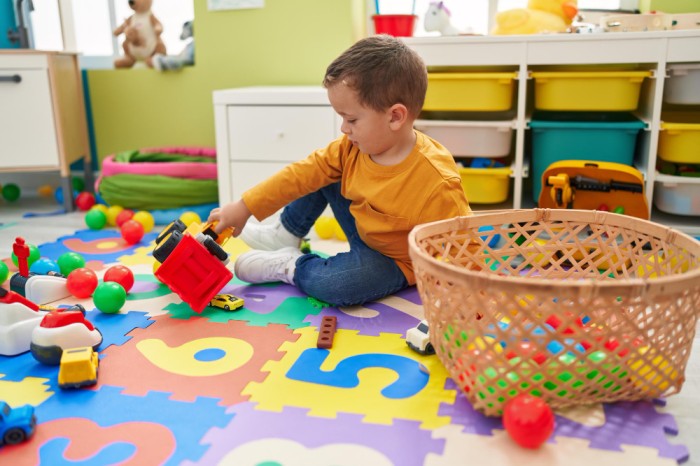
Keep frequently used items where your toddler can safely reach them. A low shelf for books, a small basket for toys, a step stool for supervised handwashing, or a child-sized place for shoes can encourage your child to participate independently.
This principle is central to Montessori education. Instead of constantly telling children what they cannot touch or do, a thoughtfully prepared environment allows them to practice appropriate skills safely.
At home, you don’t need to redesign everything. Start with one area—perhaps your child’s bedroom, play space, or morning routine.
3. Teach One Step at a Time
Sometimes toddlers resist independence because a task feels too difficult.
If you want your child to learn how to put on shoes, don’t expect them to master the entire process immediately. Start with one part of the routine. For example, your toddler might learn to place their feet near the shoes while you handle the more difficult steps.
As the skill develops, gradually transfer more responsibility to your child.
Breaking tasks into manageable steps reduces frustration and gives toddlers more opportunities to experience success.
4. Slow Down When You Can
One of the biggest challenges to toddler independence is time.
When you’re rushing to leave the house, it can be tempting to do everything yourself. Unfortunately, toddlers don’t operate on an adult schedule. A task that takes you 30 seconds may take your child several minutes.
Whenever possible, build extra time into routines that involve learning.
If your toddler wants to put on their own shoes, allow a few extra minutes. If they want to help clean up after breakfast, let them participate before moving on to the next activity.
Not every morning will allow for this—and that’s okay. Independence is built through repeated opportunities, not perfection.
5. Let Your Toddler Make Safe Mistakes
Mistakes are an important part of learning.
If your toddler spills a little water while practicing pouring, resist the urge to immediately take over. Instead, calmly help them understand what happened.
You might say, “Some water spilled. Let’s get a cloth and clean it up.”
This teaches an important lesson: mistakes can be solved.
The focus isn’t on avoiding every error. It’s on helping your child develop the confidence to try again.
6. Use Encouragement Instead of Pressure
Children are more likely to develop confidence when adults focus on effort rather than perfection.
Instead of saying, “Good job!” after every task, try describing what your child accomplished:
“You put your blocks back on the shelf.”
“You worked hard to get your shoes on.”
“You remembered where the book belongs.”
Specific encouragement helps toddlers understand what they did successfully and motivates them to repeat the behavior.
7. Give Toddlers Real Responsibilities
Toddlers love feeling useful. Simple household responsibilities can turn everyday routines into opportunities for learning.
Depending on your child’s age and abilities, you might invite them to:
- Put toys into a basket
- Carry napkins to the table
- Place dirty clothes in a hamper
- Help wipe a small spill
- Put books back on a shelf
- Water a plant with supervision
These aren’t just chores. They are practical life experiences that help children develop coordination, responsibility, concentration, and independence.
8. Avoid Turning Every Task Into a Battle
Sometimes the more adults insist on independence, the more children resist.
If your toddler says “No!” to something they’ve previously done independently, consider whether they’re tired, hungry, overwhelmed, or simply seeking connection.
Independence doesn’t mean your child must do everything alone all the time. Sometimes toddlers need help, reassurance, or a little extra attention.
A balanced approach might sound like:
“You want to do it yourself. I’ll help you with the first part, and you can finish.”
This respects your child’s desire for independence while providing the support they need.
How Montessori Education Supports Independence
A Montessori environment naturally incorporates many of these principles. Children are encouraged to participate in practical, age-appropriate activities, make purposeful choices, care for their environment, and develop skills through hands-on experiences.
At Montessori School of Downtown, children learn in an environment designed to support exploration, confidence, concentration, and growing independence. Rather than expecting children to simply follow instructions, Montessori education provides opportunities for children to actively participate in their learning and everyday routines.
For Houston families looking for quality early childhood education, choosing a school that understands how children develop can make a meaningful difference. As one of the Best Preschools in Houston, Montessori School of Downtown focuses on creating an environment where young children can build essential skills while developing confidence and a love of learning.
Building Independence Takes Time
Encouraging independence doesn’t mean eliminating every tantrum or making your toddler completely self-sufficient. It’s about giving your child appropriate opportunities to try, make mistakes, solve simple problems, and experience success.
Start small. Offer two choices. Make your home more accessible. Allow extra time when possible. Give your toddler meaningful responsibilities. Most importantly, remember that independence develops gradually.
Those seemingly small moments—putting away a toy, washing hands, choosing between two shirts, or helping set the table—can become important building blocks for confidence and lifelong learning.
With patience and a supportive environment, you can encourage your toddler to say “I can do it” while keeping the daily battles to a minimum.