
Learning behavior – The cornerstone for success is instilled by increasing the attention span in a young student, using Practical-Life exercises. These exercises satisfy the inner need of the child to be independent and though they may seem insignificant, they are the foundation for academic activity. They enable the child to gain real life experiences. They help develop motor skills, coordination, independence, concentration and above all, a sense of responsibility. Children participate in activities that are a part of daily life such as, pouring, spooning, buttoning, sorting, just to name a few. The tasks are inviting and engaging and the child spends a long time engrossed in the task and sometime repeats the task, seeking mastery. This is the equivalent of packing, for a long journey. It is being prepared to enjoy and learn from this beautiful journey of self-inspired learning. Without instilling the fundamental learning behavior in a child, it becomes very difficult to build a strong foundation upon which the child can prosper. We’ve all heard the phrase, “Give a man, a fish, and feed him for a day. Give a man, a fishing rod, and feed him for a lifetime. This learning behavior is the wood, of the metaphorical fishing rod we aim to provide the child.

Ashia Kayzer • 17 Sep 2026
Choosing the right preschool is an important decision for parents because it is often a child’s first structured learning experience outside the home. Before enrolling your child, ask about the school’s teaching approach, classroom environment,…
Ashia Kayzer • 15 Sep 2026
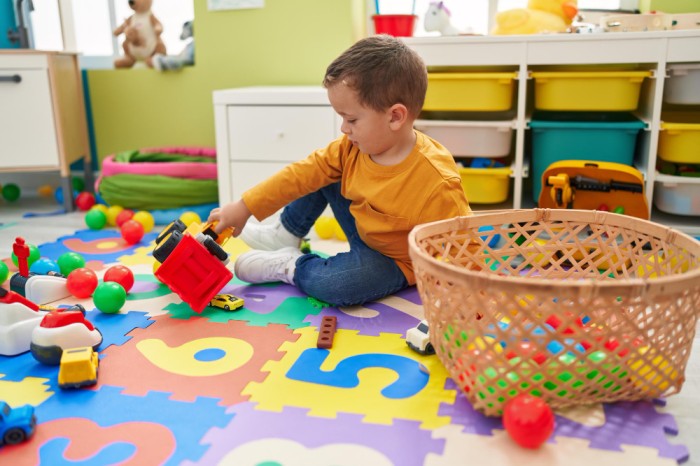
Play is much more than entertainment for preschool children. It helps them develop communication, creativity, problem-solving, motor skills, confidence, and social abilities. Through activities such as pretend play, building, drawing, puzzles, outdoor games, and practical…
