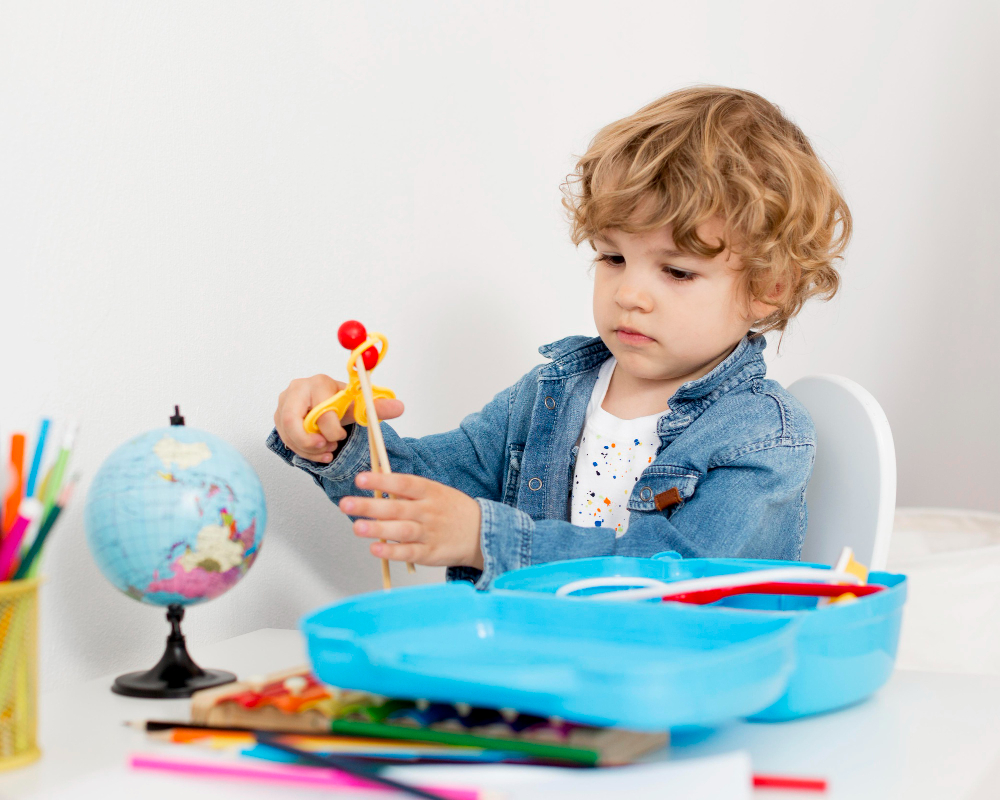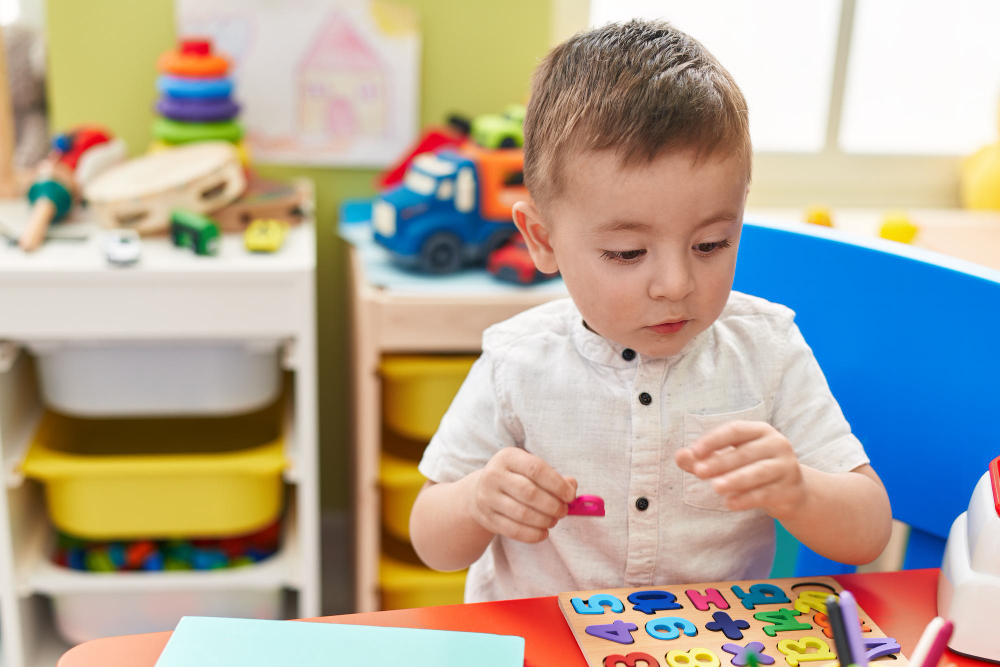
Every child develops confidence at their own pace. Some children naturally walk into a new classroom, introduce themselves, and start playing with others. Others may take more time to observe, become comfortable with their surroundings, and participate when they feel ready. If your child is shy, reserved, or hesitant in social situations, you may wonder how to help them become more confident without putting unnecessary pressure on them.
A Montessori education can provide an environment where children gradually develop independence, self-assurance, communication skills, and a positive sense of accomplishment. Instead of expecting every child to behave the same way, Montessori classrooms encourage children to learn at their own pace while giving them opportunities to make meaningful choices.
What Does It Mean for a Child to Be Shy?
Shyness is not necessarily a problem that needs to be fixed. A shy child may simply need more time to feel comfortable around unfamiliar people or in new environments. They might observe a group before joining, hesitate to answer questions, or prefer interacting with one or two familiar classmates rather than a large group.
With patience and supportive guidance, many children gradually become more comfortable expressing themselves. The goal isn’t to change a child’s personality but to help them develop the confidence to participate, communicate, and handle new experiences.
1. Montessori Encourages Children to Learn at Their Own Pace
One of the defining characteristics of Montessori education is its respect for each child’s individual pace of learning.
A shy child may not immediately want to participate in a group activity or speak in front of the class. Rather than forcing participation, Montessori educators can provide opportunities for the child to observe and become familiar with the activity first.
As the child becomes comfortable, they can choose when and how to participate. This gradual approach can help reduce anxiety and give children the confidence to try something new.
2. Small Successes Build Self-Confidence
Confidence often develops through repeated experiences of success.
Montessori classrooms include hands-on activities that allow children to practice practical and academic skills independently. A child might learn to pour water, organize materials, prepare a simple snack, complete a puzzle, or work with Montessori learning materials.
When children successfully complete an activity they initially found challenging, they experience a powerful message: “I can do this.”
These small accomplishments can accumulate over time, helping children become more willing to tackle unfamiliar tasks.
3. Children Have Opportunities to Make Choices
Having appropriate choices can help children develop independence.
Instead of always being told what to do, Montessori students are often given opportunities to choose activities from those available to them. For a shy child, having some control over their learning environment can make participation feel less intimidating.
Choosing an activity, deciding where to work, or selecting a material can give children a greater sense of ownership.
Over time, these everyday choices can strengthen decision-making skills and encourage children to trust their own judgment.
4. Montessori Creates Opportunities for Social Interaction
A Montessori classroom isn’t simply a place for independent work. Children also have opportunities to interact, collaborate, and learn from one another.
Mixed-age classrooms can be particularly helpful because younger children can observe older classmates, while older children may have opportunities to help younger students. For a shy child, these natural interactions can feel less pressured than being asked to perform socially.
A child who initially watches others may eventually begin working beside a classmate, asking for help, offering assistance, or joining a group activity.
These small interactions can become important steps toward stronger social confidence.
5. Teachers Provide Guidance Without Taking Over
A supportive Montessori teacher observes children carefully and looks for opportunities to guide them without unnecessarily doing things for them.
For a shy child, this balance can be especially valuable. An educator can encourage participation while respecting the child’s need for time and space.
Instead of speaking for a child every time they hesitate, a teacher can give them time to formulate an answer. Instead of immediately solving a problem, the teacher can offer gentle guidance that allows the child to work toward the solution independently.
This approach communicates trust in the child’s abilities.
6. A Respectful Environment Helps Children Feel Safe
Children are more likely to take risks when they feel emotionally safe.
A supportive Montessori environment can help children understand that making mistakes is a normal part of learning. They aren’t expected to know everything immediately or perform perfectly.
For a shy child, this can be particularly important. When children aren’t worried about being embarrassed for making a mistake, they may become more willing to ask questions, try unfamiliar activities, and interact with classmates.
Feeling accepted can be the foundation upon which confidence grows.
7. Practical Life Activities Encourage Independence
Montessori education places significant emphasis on practical life skills. These activities can include dressing, cleaning, organizing, preparing food, caring for the classroom environment, and other age-appropriate responsibilities.
Although these tasks may seem simple, they give children opportunities to develop independence.
A child who learns to manage everyday responsibilities begins to recognize that they are capable of contributing and taking care of themselves. That sense of capability can extend beyond practical tasks and into academic and social situations.
8. Montessori Avoids Unnecessary Comparisons
Every child has different strengths, interests, and developmental needs. Constant comparison with classmates can make a shy child feel inadequate or reluctant to participate.
Montessori education emphasizes individual progress rather than requiring every child to reach the same milestone at exactly the same time.
When children can focus on their own progress, they may become less concerned about whether they are “better” or “worse” than someone else. This can create space for confidence to develop naturally.
How Parents Can Support a Shy Child at Home
Parents can reinforce confidence-building habits outside the classroom.
Give your child opportunities to make age-appropriate choices, encourage them to complete tasks independently, and celebrate effort rather than perfection. You can also arrange playdates with one or two familiar children instead of immediately placing them in large social situations.
Most importantly, avoid labeling your child as “the shy one.” Children can begin to internalize labels, and repeatedly describing them as shy may make them less likely to try new social experiences.
Instead, acknowledge their feelings while encouraging gradual progress: “It can take time to feel comfortable. You can try when you’re ready.”
Choosing a Supportive Preschool Environment
The right preschool environment can make a meaningful difference in how a child experiences learning and social development. Parents should look for educators who are patient, observant, encouraging, and respectful of individual differences.
For families considering Montessori education, Montessori School of Downtown, being one of the Best Preschools in Houston TX, offers a Montessori environment designed around children’s individual development and growing independence.
During a school visit, parents can ask how teachers support children who are slow to warm up, how social interaction is encouraged, and how educators communicate with families about a child’s progress.
Confidence Grows One Step at a Time
Shyness doesn’t have to prevent a child from becoming confident. Confidence is often built through small, repeated experiences: completing a challenging activity, making a choice, helping a classmate, speaking up, or trying something new.
A Montessori environment can give children the time, independence, and encouragement they need to develop these abilities naturally.
Rather than asking a shy child to become someone they’re not, the goal is to help them discover what they are capable of. With supportive adults, meaningful opportunities, and plenty of patience, a quiet child can gradually find their voice—and develop the confidence to use it.