Play is much more than entertainment for preschool children. It helps them develop communication, creativity, problem-solving, motor skills, confidence, and social abilities. Through activities such as pretend play, building, drawing, puzzles, outdoor games, and practical tasks, children learn naturally while having fun. A well-designed preschool environment gives children opportunities to explore, make choices, interact with others, and develop skills at their own pace.
Why Is Play Important in Preschool?
For young children, play is one of the most natural ways to learn. Before children can understand complex concepts through formal lessons, they learn by touching, moving, observing, experimenting, and interacting with the world around them.
Play allows preschoolers to turn everyday experiences into learning opportunities. A simple activity such as building with blocks can introduce concepts related to balance, shapes, size, and problem-solving. Similarly, pretend play can help children understand different roles, express their thoughts, and develop communication skills.
This is why play is an important part of a quality preschool education rather than simply a break between lessons.
1. Play Develops Social Skills
Preschool is often one of the first environments where children regularly interact with a larger group of children outside their family.
Group play teaches children how to:
- Share toys and materials
- Take turns
- Listen to others
- Cooperate during activities
- Express their ideas
- Respect personal space
- Resolve small disagreements
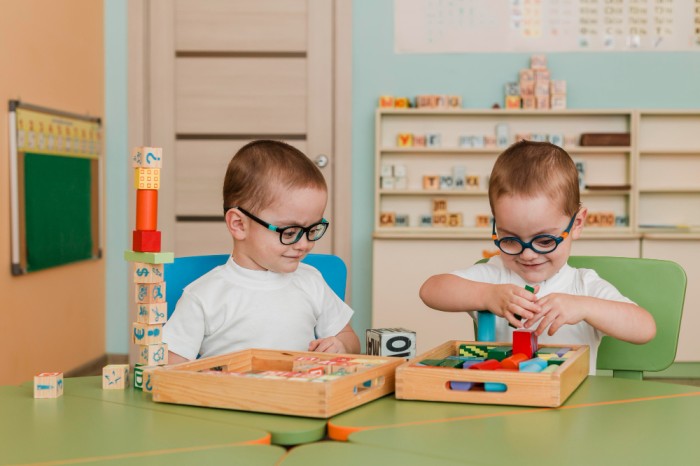
For example, when children work together to build something with blocks, they have to communicate and decide how to complete the activity. These everyday interactions gradually help children become more comfortable in social situations.
2. Play Encourages Creativity
Children naturally have active imaginations. Giving them opportunities for pretend play, drawing, music, storytelling, and creative activities allows them to express their ideas freely.
A cardboard box can become a house, a vehicle, or anything a child imagines. A few crayons can become an opportunity to create an entire story through pictures.
Creative play does not always require a specific right or wrong answer. This encourages children to experiment, make choices, and develop their own ideas.
3. Play Supports Problem-Solving Skills
Preschoolers encounter small challenges throughout their play. They may need to figure out how to complete a puzzle, balance blocks, organize objects, or find a way to complete a particular task.
Instead of immediately giving them the answer, allowing children time to explore possible solutions can help develop their problem-solving abilities.
For instance, if a block tower falls, a child may try placing the larger blocks at the bottom or changing the structure. Through this process, the child learns from experience.
These simple moments can help develop curiosity and logical thinking.
4. Play Helps Develop Physical Skills
Physical play is another important part of preschool education. Running, jumping, climbing, throwing, drawing, cutting, building, and other activities help children develop different types of motor skills.
Outdoor activities can support gross motor development, while activities such as drawing, threading, puzzles, and handling small classroom materials can strengthen fine motor skills.
Developing these abilities can also help children become more confident when performing everyday tasks independently.
5. Play Builds Communication Skills
Children learn to communicate naturally when they play with teachers and classmates.
During pretend games, group activities, and storytelling, children get opportunities to learn new words, describe what they are doing, ask questions, and express their thoughts.
For example, a child playing a pretend shopkeeper may practice phrases related to buying, selling, counting, and conversation. The activity feels like fun, but the child is simultaneously developing vocabulary and communication skills.
6. Play Builds Confidence and Independence
Preschool children are constantly learning how to do things independently. Play provides a safe environment where they can make choices and try different approaches.
Choosing an activity, completing a puzzle, building a structure, or finishing an art project can give children a sense of accomplishment.
Even when something does not work the first time, children can try again. This helps them understand that mistakes are a normal part of learning.
Over time, these experiences can encourage greater confidence and independence.
7. Play Makes Learning More Engaging
Young children may find it difficult to stay engaged with long periods of formal instruction. Play-based learning makes educational experiences more interactive and meaningful.
Teachers can introduce early concepts such as numbers, letters, shapes, colors, patterns, and sequencing through games and hands-on activities.
For example, sorting objects by color can introduce classification, while counting toys can introduce early mathematical concepts. Children are learning important ideas without feeling that they are simply completing a lesson.
8. Play Supports Emotional Development
Children also use play to express emotions and understand different experiences.
Pretend play can allow children to recreate situations they have experienced or imagine situations that help them understand other people’s perspectives. Playing with others can also teach children how to manage excitement, disappointment, patience, and cooperation.
A supportive preschool environment gives children opportunities to experience these emotions while learning appropriate ways to respond.
What Does Meaningful Preschool Play Look Like?
Effective play-based learning does not mean children are left without guidance. Teachers can carefully prepare environments and activities that encourage exploration while providing support when needed.
Meaningful preschool play can include:
- Building and construction activities
- Art and creative projects
- Pretend and role-play activities
- Puzzles and matching games
- Music and movement
- Outdoor exploration
- Storytelling
- Water and sensory activities
- Practical everyday tasks
The goal is to provide children with opportunities to explore while developing skills naturally.
Creating a Positive Preschool Learning Environment
The environment plays an important role in how children learn through play. Children benefit from classrooms where materials are accessible, activities are age-appropriate, and they have opportunities to make choices.
A thoughtful learning environment can encourage children to explore independently while teachers observe their interests and provide appropriate guidance.
This approach is especially valuable in early childhood because every child develops at a different pace.
Conclusion
Play is a fundamental part of preschool education. It gives children opportunities to explore, communicate, create, solve problems, develop physical abilities, and build confidence.
When play is thoughtfully included in the learning environment, everyday activities can become meaningful educational experiences. Children can learn important skills while remaining curious, active, and engaged.
For parents looking for an environment that values hands-on learning and early childhood development, Montessori School of Downtown, being one of the Best Preschool in Texas, provides a learning approach where children can explore, develop independence, and build a strong foundation for their future education.