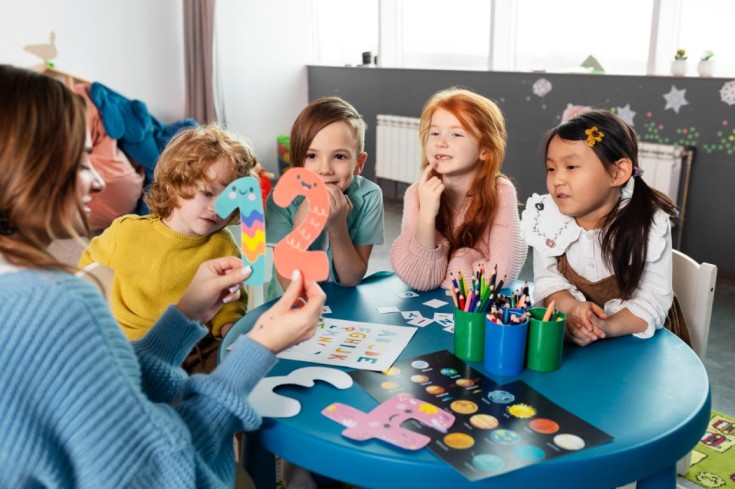
Why the First Five Years Decide a Child’s Future
The first five years of a child’s life are not just a stage of growth—they are the foundation on which all future learning, behavior, and emotional well-being are built. During this period, children develop cognitive abilities, language skills, emotional intelligence, and social understanding at a pace that will never be matched again. Early childhood education during these formative years plays a critical role in shaping how children think, feel, and interact with the world.
Rather than focusing only on academic readiness, quality early education supports the whole child, ensuring balanced development that leads to long-term success.
How Brain Development Happens Before Age Five
By age five, a child’s brain has developed approximately 90% of its adult structure. These years are marked by rapid neural connections that are shaped by daily experiences. Positive learning environments strengthen these connections, while neglect or poor stimulation can limit development.
Early childhood education supports brain development by:
-
Encouraging curiosity and exploration
-
Providing structured yet flexible routines
-
Offering language-rich environments
-
Supporting emotional security
Learning during this phase is experiential, not instructional. Children learn best by interacting with their surroundings.
Learning Through Play: The Natural Way Children Learn
Play is not a break from learning—it is the most powerful learning tool in early childhood. Through play, children experiment, problem-solve, communicate, and express emotions. Purposeful play supports intellectual growth while keeping learning enjoyable.
High-quality early education programs incorporate:
-
Hands-on activities
-
Role-play and imaginative scenarios
-
Building and sorting materials
-
Outdoor physical play
These activities help children develop creativity, reasoning skills, and resilience without pressure or competition.
Social and Emotional Development Starts Early
One of the most important benefits of early childhood education is social-emotional development. Young children learn how to interact with others, manage emotions, and understand social norms in a group setting.
Early education helps children:
-
Share and cooperate
-
Express feelings appropriately
-
Develop empathy
-
Build confidence and self-awareness
Children who develop strong emotional foundations early are better equipped to handle academic challenges and social relationships later in life.
Building Independence and Self-Confidence
Independence is a critical life skill that begins in early childhood. When children are encouraged to try tasks on their own, they develop confidence and a sense of responsibility.
Early education environments support independence by:
-
Allowing children to make choices
-
Encouraging self-care routines
-
Promoting problem-solving
-
Valuing effort over perfection
This approach helps children believe in their abilities rather than relying constantly on adult direction.
Language and Communication Development
The early years are a critical period for language acquisition. Children exposed to rich vocabulary, meaningful conversations, and storytelling develop stronger communication skills.
Early childhood education supports language development through:
-
Group discussions
-
Reading aloud sessions
-
Songs and rhymes
-
Encouraging questions and expression
Strong language skills improve comprehension, literacy readiness, and social interaction as children grow.
Academic Readiness Without Pressure
Contrary to popular belief, early childhood education does not mean forcing academics too early. Instead, it prepares children for future learning by developing foundational skills such as concentration, memory, and logical thinking.
Children who attend quality early education programs often show:
-
Better focus and attention
-
Stronger problem-solving abilities
-
Positive attitudes toward learning
-
Improved classroom behavior
These skills make the transition to formal schooling smoother and less stressful.
Long-Term Benefits of Early Childhood Education
Research consistently shows that children who receive quality early education perform better not only in school but throughout life. The benefits extend far beyond academics.
Long-term outcomes include:
-
Higher academic achievement
-
Better emotional regulation
-
Stronger social relationships
-
Greater adaptability and resilience
Early education is an investment that continues to pay dividends well into adulthood.
Montessori Philosophy and Early Education
The Montessori approach is particularly effective during the first five years because it respects a child’s natural development. Learning environments are designed to promote independence, hands-on exploration, and self-paced growth.
At Montessori School of Downtown, early childhood education focuses on guiding children rather than directing them, allowing curiosity and intrinsic motivation to drive learning.
Creating a Strong Foundation for Lifelong Learning
Early childhood education is not about rushing children toward academic milestones. It is about giving them the tools they need to become confident, capable, and emotionally balanced individuals.
Montessori School of Downtown emphasize respect for the child, meaningful experiences, and holistic development—ensuring that children are not only school-ready but life-ready.
Final Thoughts: Why Early Education Truly Matters
The first five years are a once-in-a-lifetime opportunity to shape a child’s future. Quality early childhood education nurtures curiosity, builds confidence, and lays the groundwork for lifelong success. When children are supported during these critical years, they grow into learners who are capable, compassionate, and eager to explore the world.