Is Your Child Ready for Kindergarten? What Houston Preschool Should Build
Kindergarten can feel like a big leap. Parents wonder whether their child knows enough letters, can sit still long enough, or will make friends. The good news: kindergarten readiness is about much more than reciting the alphabet—and much of it can be built gradually in a strong preschool.
This guide explains what readiness really looks like, how a full-day preschool helps, and the questions to ask any Houston preschool about getting children ready for the next step.
First, the timing: kindergarten age in Texas
In Texas, public school districts provide kindergarten for children who are at least 5 years old on September 1 of the school year (Texas Education Code §29.151). According to the Texas Education Agency’s kindergarten FAQ, kindergarten itself is not mandatory; compulsory attendance begins at age 6, though children enrolled in kindergarten are expected to attend (TEA Kindergarten FAQ).
So for most families, the preschool years—roughly ages 3 to 5—are the runway. Our private preschool program at Montessori School of Downtown (MSODT) serves children ages 3 to 6.
Readiness beyond ABCs
Kindergarten teachers often say the hardest adjustments are not academic. Children who struggle early tend to have trouble with routines, waiting, or managing frustration—not with letter names. Readiness usually includes:
- Self-care: using the bathroom, washing hands, managing a coat and lunch, tidying up
- Social-emotional skills: taking turns, joining play, handling disappointment, asking an adult for help
- Attention: staying with a task for a reasonable stretch, even when it is a little challenging
- Following directions: listening to and carrying out two- or three-step instructions
- Independence: trying things on their own before asking for help
These skills grow with practice in a classroom community—which is one reason preschool matters.
Early literacy and number sense
Academic foundations still count. Signs of early literacy and math readiness include:
- Recognizing that letters represent sounds, and hearing beginning sounds in words
- Interest in books and stories; retelling a simple story
- Holding a pencil or crayon with growing control
- Counting objects accurately and understanding “more” and “less”
- Noticing shapes, patterns, and sizes
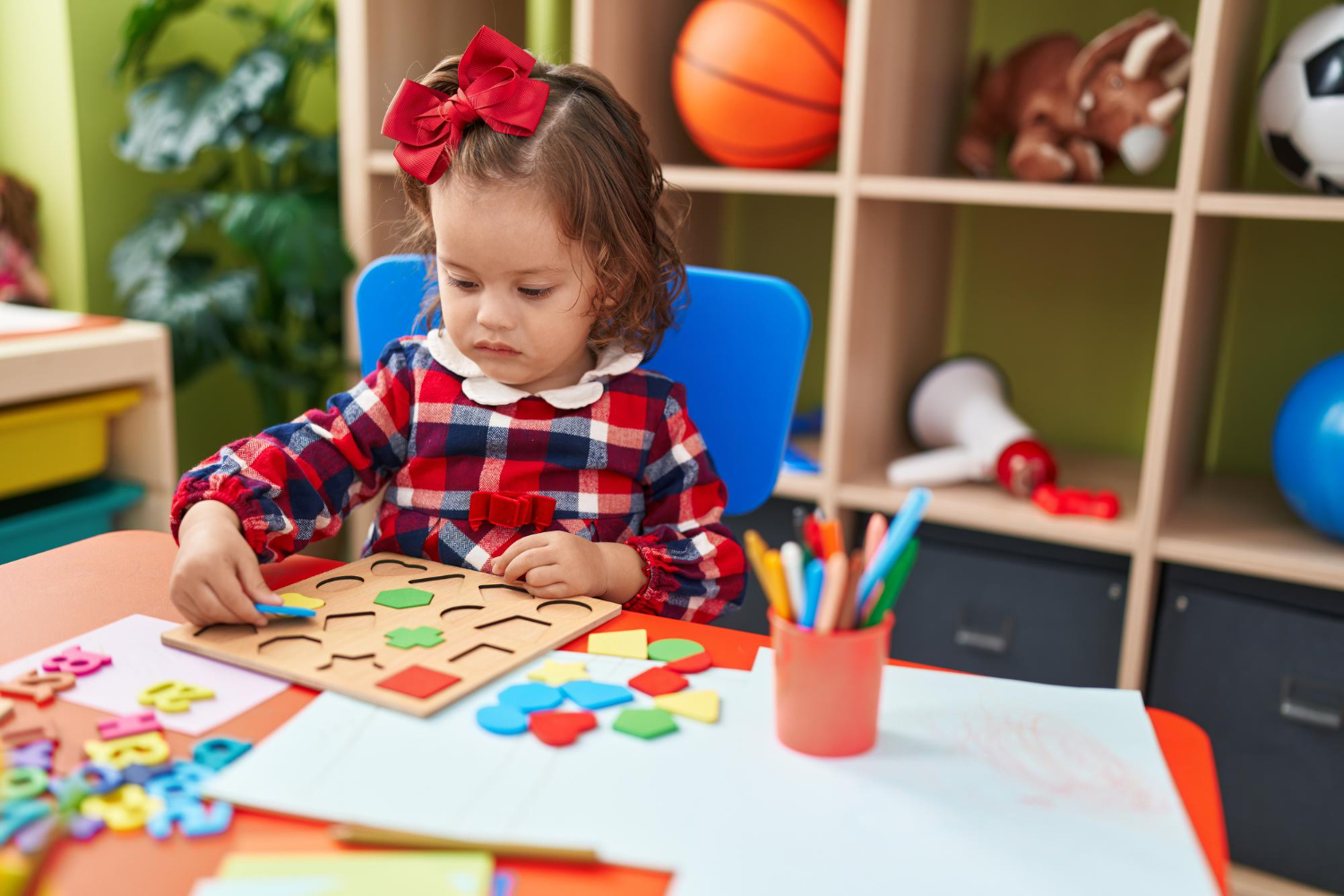
In MSODT preschool classrooms, these skills are built with hands-on materials—for example, sandpaper letters and a movable alphabet for sounds and early writing, and bead materials for counting and quantity. That is the Montessori method at work: children learn concepts by touching and doing before moving to paper.
How a full-day preschool day builds stamina
Kindergarten days are long. A full-day preschool helps children practice the rhythm: a focused work period, outdoor play, lunch, rest or quiet time, and afternoon activities.
At MSODT, preschool days are built around a long morning work period, when children choose activities and receive individual or small-group lessons. Afternoons include rest for younger children and quiet work, art, music, and cultural activities for older children. Campuses are typically open 6:30 AM–6:00 PM, Monday–Friday.
That structure gives children repeated, low-pressure practice with exactly the skills kindergarten asks for: transitions, self-direction, and getting along in a group.
What MSODT preschool emphasizes
Our preschool program highlights six areas that children carry into kindergarten:
- Phonics and early reading
- Number sense and early math
- Concentration and work habits
- Social-emotional skills
- Independence and self-care
- A genuine interest in learning
The mixed-age classroom (ages 3–6) adds something extra: by their final preschool year, many children are the “big kids” in the room, helping younger classmates and gaining confidence that serves them well in a new school.
Every child develops at their own pace. We do not promise that every child will be reading by a certain age; we focus on steady progress and the habits that make learning easier wherever children go next.
Simple ways to build readiness at home
You do not need flashcards to help. Everyday routines do a lot:
- Let your child put on shoes, carry a backpack, and clean up after snack.
- Read together daily and talk about the story.
- Count real things—stairs, apples at the store, plates at dinner.
- Practice waiting and taking turns in simple games.
- Talk through feelings when things go wrong, and name what helped.
These small moments reinforce what children practice in the classroom.
Questions to ask any Houston preschool about kindergarten readiness
Use these on every tour:
- How do you teach early reading and math for my child’s age?
- How do you build independence and self-care?
- How do you help children manage frustration and conflict?
- How do you share progress with parents?
- What does the last year before kindergarten look like here?
- Can my child continue into elementary on the same campus? (MSODT offers an Elementary program for ages 6–10.)
Next step
Readiness is easier to judge in person than online. Schedule a tour at a campus near you—such as our Clear Lake or Shadow Creek locations—and see the preschool classroom in action. For enrollment and tuition next steps, visit our Admissions page.
Optional FAQ block
What skills does my child need for kindergarten?
Self-care, social skills, attention, following directions, and early literacy and math foundations.
How old must my child be for kindergarten in Texas?
At least 5 years old on September 1 of the school year (TEC §29.151).
Does preschool help with kindergarten readiness?
A quality preschool gives children daily practice with routines, social skills, and early academics. Ask any program how it builds each area.
What ages does MSODT preschool serve?
Ages 3 to 6, in mixed-age classrooms, with elementary available for ages 6–10.